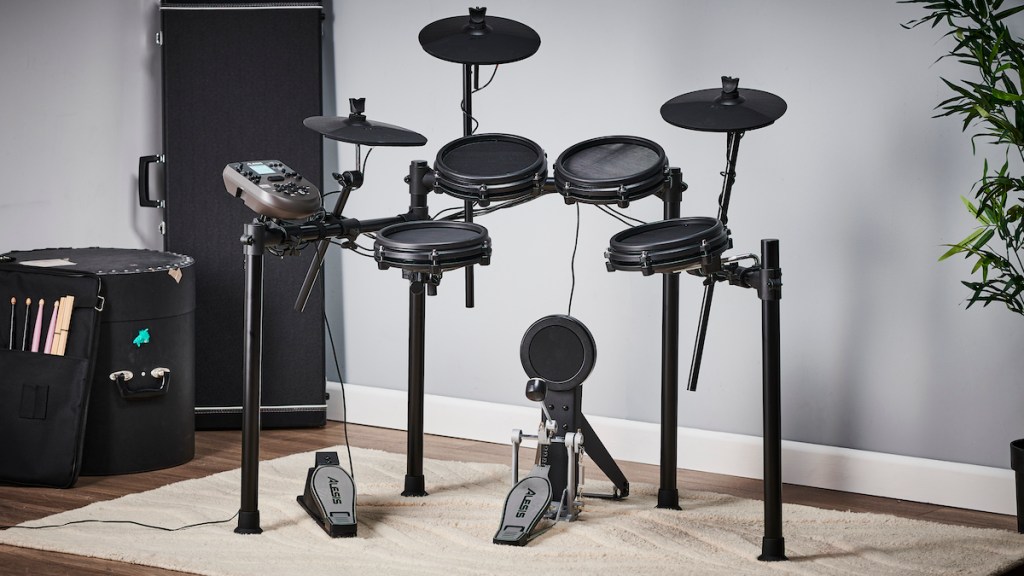
Here’s a clean, buyer-focused comparison review of the Alesis Nitro Mesh Kit and two of its closest budget competitors: the Yamaha DTX402K and the Roland TD-1K. I’ve tested and researched the major specs, playability, module features, and value so you can pick the one that fits your needs.
Quick summary
- Best value for mesh heads / quiet practice: Alesis Nitro Mesh. alesisdrums.com
- Best learning tools & sounds for beginners who like apps: Yamaha DTX402K. Yamaha Music USA
- Best brand reliability & upgrade path (classic V-Drums quality): Roland TD-1K. Roland
What you get (short specs at a glance)
- Alesis Nitro Mesh — mesh heads (snare dual-zone, toms mesh), 40 kits / 385+ sounds (module varies by Nitro/Nitro Max bundles), USB-MIDI, kick pedal + hi-hat controller included. Mesh heads = quieter, more natural rebound. alesisdrums.com
- Yamaha DTX402K — rubber pads (built for durability), DTX402 module with ~287 percussion voices, KU100 silent kick unit, hi-hat controller, strong app integration (DTX402 Touch / Rec’n’Share). Emphasis on training features. Sweetwater
- Roland TD-1K — compact V-Drums kit, Roland TD-1 module (15 kits), robust build and brand reputation, rubber pads (some TD-1KV variants add mesh snare). Often sits right around the $400–$550 range depending on retailer. Roland
Playability & feel
- Alesis Nitro Mesh — Mesh heads give the most drum-like feel in this price class. The snare’s dual-zone sensing on many Nitro variants makes rimshots and center hits feel more convincing than single-zone rubber pads. Great for players who want a true “stick rebound” and quieter practice. alesisdrums.com
- Yamaha DTX402K — Rubber pads aren’t as springy as mesh, but Yamaha tunes its response well. The DTX402K is designed with educational use in mind — hi-hat control and training modes make it friendly for structured practice. If you prioritise built-in lessons and app workflows, Yamaha is strong. Yamaha Music USASweetwater
- Roland TD-1K — Roland’s ergonomics and pad response are solid; older TD-1K pads are rubber (some TD-1KV variants add mesh snare). The feel is dependable and predictable, and the kit is known to be durable under regular use. Roland
Sound module & features
- Alesis Nitro — Alesis gives you a big sound library and useful connectivity (USB-MIDI, auxiliary in on some bundles). Modules on Nitro/Nitro Max are very configurable and aimed at hobbyists who’ll experiment with many kits/sounds. Good value for the number of preset/user kits. alesisdrums.com
- Yamaha DTX402K — Focused on learning: multiple training functions, play-along songs, Rec’n’Share / DTX apps for tracking progress. Sounds are good, and the module is easy to edit. Less “overwhelming” than Alesis (fewer user sound-editing bells and whistles), but very practical. Yamaha Music USA
- Roland TD-1K — Roland’s module is simpler but benefits from Roland’s sound design and stable firmware. Fewer bells than Alesis, but the quality of the presets is high and consistent with the V-Drums ecosystem — useful if you plan to upgrade pads/modules later. Roland
Build quality & reliability
- Alesis: excellent bang-for-buck; mesh heads are a standout at this price. Some users report rack stability and hardware finish are “budget-grade” (acceptable, but not premium). Overall value is the headline. alesisdrums.com
- Yamaha: slightly more conservative construction but well engineered, with the KU100 silent kick unit being a nice inclusion for realistic kick feel at low volume. Yamaha pads tend to be robust and reliable for teaching environments. Sweetwater
- Roland: generally the most rugged and “pro-feeling” out of the three; historically Roland pads/modules are built to higher tolerances — that reliability is part of Roland’s premium reputation. Roland
Value & who it’s for
- Choose Alesis Nitro if: you want mesh heads for the best rebound/quiet practice under $500, lots of sounds and customization, and the absolute best “play feel” for the price. Great for bedroom players and learners who care about realistic stick response. alesisdrums.com
- Choose Yamaha DTX402K if: you want integrated learning tools, app connectivity and a dependable kit for lessons, schools, or structured practice. Good middle ground for learners who want guided progress. Yamaha Music USASweetwater
- Choose Roland TD-1K if: you value build quality, long-term upgradeability within the V-Drums ecosystem, and brand reputation. It’s frequently recommended when you want a simple, robust starter kit from a pro brand. Roland
Pros & cons (short)
- Alesis Nitro Mesh
-
- Mesh heads, excellent feel, many sounds and kits, USB-MIDI. alesisdrums.com
- − Budget rack/hardware, module depth less “polished” than higher-end competitors.
-
- Yamaha DTX402K
-
- Training functions, app support, reliable build, silent kick unit. Yamaha Music USASweetwater
- − Rubber pads vs mesh (less natural rebound), fewer user sound-editing features.
-
- Roland TD-1K
-
- Solid build quality and V-Drums pedigree, dependable module. Roland
- − Typically a bit more expensive for similar entry-level features; older TD-1K pads are rubber unless you buy the TD-1KV (mesh snare).
-
Closing overview
If your priority is realistic feel and quiet practice (and you want the most drum-like rebound under $500), the Alesis Nitro Mesh is the best pick — particularly the Nitro/Nitro Max variants that include mesh snare and toms and a very generous sound library. alesisdrums.com
If you’re buying for structured learning, lesson plans, or classroom use, the Yamaha DTX402K is compelling because of its training features, apps, and stable ergonomics. Yamaha Music USASweetwater
If you value durability and the clean upgrade path into Roland’s V-Drums ecosystem, the Roland TD-1K (or TD-1KV if you want mesh) gives you that reputation and long-term reliability — it’s often worth paying a bit more for the Roland badge if you plan to upgrade later. Roland

 Pro Sound Insight